



When it comes to losing weight, many people swear by keeping a food journal. These days, websites like SparkPeople, Livestrong, and Fit Day have made keeping a food journal easier than ever. So, do food journals really help when it comes to losing weight? And are there any downsides to keeping a food journal?
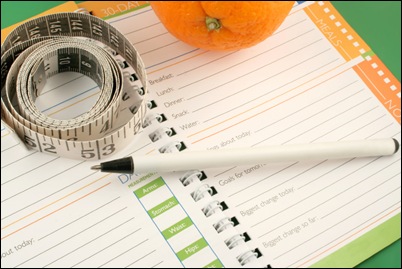
where to start?
There are plenty of options available if you’re interested in starting a food journal.
1. It seems as though the most popular route is the online food journal, such as the ones I just mentioned.



2. You could also go the traditional route by getting a handwritten journal (the more portable, the better).
3. I’m sure it’s no surprise to hear, there’s an app for that. MyNetDiary is available for BlackBerry and iPhone users. Also check out BlackBerry App World and browse iPhone apps for more options.
 |
 |
PROS of keeping a food journal.
1. Accountability. Knowing that you have to manually write down what you eat makes it more likely that you’ll stick to your healthy eating plan. It’s suggested to even track “indulgent” days where overeating may have taken place because you’ll be more likely to avoid that happening again in the future (source).
2. Awareness. Being able to visually keep track of what you eat is helpful because it turns your eating habits into a reality, rather than something you can just ignore or deny. Food journals can help you become more aware of if you’re engaging in mindless eating…even if it’s just “a few bites” here and there. Also, journaling can help you realize how certain foods affect your appetite, mood, etc.
3. It works! Studies have shown that people who keep a food journal are not only successful with losing weight but are also more likely to keep the weight off.
CONS of keeping a food journal.
1. Burdensome. Keeping a food journal can become downright annoying for some people. Not everyone has the patience to carry around a notebook and/or input their food after every eating experience.
2. Can become obsessive. Food journals can become a mental and emotional hindrance to some people. Thinking “I need to write/type this in my journal ASAP,” or being overly-meticulous about tracking the calories/nutrients in food can easily sneak up on some people. This obsessive thinking can lead to disordered thoughts about food and greatly diminish your quality of life.
3. Can result in “all or nothing” thinking. An overeating experience can cause people to avoid writing down their food because they feel like they somehow failed. This sort of thinking often leads to even more overeating because you can just “start over” tomorrow. Because journaling makes food/eating become more of a reality, not journaling can make it seem like the eating event didn’t actually happen.
my take.
I think that for people who are trying to lose weight, food journals typically provide more good than harm. However, I think it’s important to remain mindful of the possible negative effects that food journal can have, such as obsessive thinking. I also think that there should be a goal of eventually learning how to eat properly without having to keep a food journal.
Furthermore, I suggest taking food journaling a step further by writing down how you’re feeling mentally and emotionally. As yourself questions like:
- Why am I eating this?
- Am I really hungry?
- What is my appetite on a scale of 1-5?
- What is going on in my life that is making me feel happy/sad/angry/etc.?
- How will/did I feel after eating this?
Learning these things about yourself and dealing with any underlying issues in your life will make you more able to continue a healthy eating pattern in the future…without having to write everything down.
What are your thoughts on food journals?
Have you ever kept a food journal? Why or why not?


Totally agree with you and couldn’t have said it better myself. As long as it doesn’t become obsessive or cause negative feelings, I think it can be beneficial.
I used to keep a food journal regularly and it definitely helped! However, I didn’t so much do mine to lose weight, I did mine because my body wasn’t feeling as high energy as it used to and I knew I was feeding my body junk! My food journal helped me spot the times and the types of food that were the trouble areas. I absolutely agree that it can be burdensome though.
As I was moving away from my eating disordered habits, I started a food journal, promising myself that it was just to keep tabs on my protein, my vitamin, etc…but I found that it was just another mechanism for making my eating a strictly monitored pattern. Once I realized this, the best thing I ever could have done for myself was to stop counting ANYTHING food related - meals, calories, grams of fat, etc…
For me, keeping a food journal became entirely too obsessive. I found that I was thinking about nothing but food! If I wasn’t thinking about how I needed to record what I had just eaten, then I was planning for exactly how many calories my next meal could be/would have to be in order for me to stay within my “limit” for the day. I also found that I was eating more “diet” foods in order to get more volume into my diet instead of eating smaller portions of healthier foods.
I do think, however, that keeping the journal did orient me towards healthier portion sizes and healthier foods. It made me more aware of when and why I was eating. I definitely think that they work great for some people, but for me it just reinforced my compulsive thoughts about food :/
I couldn’t agree with this post more! A “Food-Mood Journal” is emotionally and mentally a healthier version of journaling, if someone is so inclined to do it.
I just read another blog post that mentioned a great iPhone app that helps you track what you eat, but its focus is on Mindful Eating, not calculating calories or fat or nutrients-it doesn’t even do that!
i keep track on livestrong.com but i don’t use it alllll the time. i use it mostly to analyze what i’m eating as far as content goes…not the numbers. i find it very useful for recipes.
Food journaling was definitely one of the factors of my disordered eating. After awhile, I was tracking serving sizes of mustard to the nearest 1/2 tsp. Holy crap, not normal. I think if you are able to do it in a “healthy” way, it is a great way to actually “know” what you’re eating.
I think its so benefitial for newbies who are new to the healthier eating game to keep a food journal and kind of get an idea of what they are eating, etc.
But, for me, where I’m at now-it’s not a good idea and I much prefer just being able to eat.
Great post! I’m using sparkpeople right now to help me shed a few lbs. But I do agree it becomes too obsessive, and all I think about is food. It’s good though to get me back on track.
I am definitely pro food journal while trying to lose weight — it really helps to see what you are eating. Also, I’m very pro handheld journal (gasp, paper!) I can’t get into doing it online and there it isn’t in my view. I think people can definitely become obsessed or frustrated quickly and in denial that they ate something — so they just don’t write it down and therefore it doesn’t exist.
I don’t use one. I like to be able to eat intuitively and since I’m not trying to lose weight I’m not sure getting obsessive will make much of a difference. Great comparison!
GREAT POST! FOr weight loss, I think keeping track of what’s going in your mouth only helps. But, there is a fine line between “helps” and “obsession.”
I have a very regimented/strict diet that I am on as I prep for figure competition so I have to be meticulous about everything I put into my body. It’s VERY tedious, but it’s the name of the game. With that said, I do keep a journal on TheDailyPlate (Livestrong) but after the competition is over, I’m going back to BFL-style eating where I don’t count calories and instead use palm/fist portion sizes of healthy foods.
I think food journals have their place, but you are right- if someone becomes obsessed with counting every calorie, it can perpetuate disordered eating.
I kept a food journal for a few years. It started off as a healthy way to stay aware, then morphed into a source of guilt when I indulged, and eventually became an obsession- it made me SO anxious to eat anything I didn’t eat the exact calorie count of. It took a LONG time to kick the habit, but I’m so glad I did, because it was annoying as heck to open the computer every time I ate something. That being said, I see blogs as somewhat of a food journal. It helps keep me accountable and also forces me to consider whether I’m eating a) enough and b) mindfully. Plus, I like documenting my life with food pictures Great post love!!
totally agree! i think a food journal CAN be a good idea especially if it helps a person lose weight who wants to. I think there is a fine line where it become obsessive and thats where it becomes more of an issue
great post!
I’m pro on the food journa idea. It’s a great tool for me as I keep track of what I’ve eaten, how I worked out, if I took my vitamins, and if I drank enough water. I use a written journal and review my “successful” ones to see where I’m going wrong and how to get back on track. Once I did get obsessive and began keeping track of calories, etc. on an online journal and that turned into a failure. Just a few brief notes daily and I’m good to go.
i stil use my diary on some days when i feel like maybe iam eating to much or to little just to see where i am at. but i agree its important to be bale to eat all that without being tied down to a calorie counter. so now i have a kinda of a random question could you possible do a post on the cost of the summit in general this year (not like how much you spent), could you talk about saving up tips for the summit any other smart saving tips you might have used? i plan on going next year but for some reason this yr i felt scared becuase i had no idea how much it could cost
i think food journals are great in helping people figure out certain foods that may not agree with them or cause allergies, and definitely can help pinpoint times of day or types of food that are eaten too much. i think they should be used as a tool in overall diet improvement and planning, not necessarily calorie counting.
I am doing my Livestrong MyPlate tool daily again. I agree with your pros and cons. It’s kind of eye-opening to see what you’re throwing in your body on a regular basis.
Totally agree with you! I think food journals are great as long as it doesn’t become an obsession. Eat to live not live to eat right?
They are definitely beneficial, but for me personally, they became an obsession so I stopped. I’m so mad we didn’t get to spend more time together at HLS, btw. There were just too many people to talk to!
I definitely agree. I’ve kept one at Livestrong for years and I go back to it when I need to check myself but I’m not religious about it like I used to be.
Gracie, I think you hit it dead on when you advised to include emotions and hunger levels in the journal. Then the whole idea becomes one of eating with awareness and intention, rather than obsessively counting things.
I was just thinking about food journals. I used to keep one through LiveStrong and I found it really helpful to find out how many calories I was eating and where they were coming from. But once I got my eating under control I quick, because it really was a hassle, especially for someone who doesn’t eat many processed foods. It was easy to input anything in a wrapper, but whenever I cooked something I had to put in every single ingredient (or put in every ingredient into a recipe calculator to figure out the numbers for a serving). So it got old quickly.
Now I’ll journal for a day or 2 every now and then just as a way to check back in. But I can’t imagine going back to doing it for everything I eat every day.
I have some conflicting opinions on food journals. I used one last year, but it did contribute to my obsessive relationship with food/eating. Breaking from the food diary was one of my biggest obstacles in overcoming my ED, but it made a difference. Now, I do occasionally use a food journal if I feel I need to get back “on track,” but then I stop when I am feeling confident/comfortable with my eating.
Totally depends on the person. For me, it led to obsessive/all or nothing thinking, but I wasn’t in a good place emotionally at that time. I feel like now I could “handle” the food journal, but I prefer to just practice listening to my body’s signals instead!
I have an on-again-off-again relationship with my food journal. When I am not feeling great in my skin, I go back to it- just writing what I eat and anything else I want to add in. But I like to carry around my own because it’s convenient for me and also because I don’t use it to track calories.
Even though I haven’t used it in a loooonnnnggg time, I really do like SparkPeople’s setup. I might use it here or there while using the baby weight. I know I can’t use it every day and all the time bec it makes me obsessive though. And gives me the all or nothing menality you mentioned. Sometimes its helpful to see though that a bit of chocolate doesn’t derail your efforts if kept in reason.
I keep a food journal - a paper one - and I definitely agree with the pros AND the cons. You were right, though, in that you should learn to live without it. What I’ve noticed, now that I’m at goal weight and have been for a few months, is that the journal is a security blanket. Stop journaling = gain weight was my thinking for awhile and I’m slowly easing out of it. GREAT post!
Hi Gracie-Just wanted to let you know I received my massive amount of Terra chips in the mail from your giveaway! I am so excited to eat them all , thank you!
I think a food journal can be an informative way to look at your daily food intake - IF you have a good reason to be looking into it. e.g. to gauge your nutrient levels; monitor your reactions to certain things like dairy; determine if an eating pattern is affecting your appetite; etc. Essentially investigating the points you brought up.
Where I feel like there’s a precarious line that can easily be crossed is the counting of straight calories (without a larger picture of health). You can lose sight of how actually healthy you’re being, and I do think it can lead quickly to obsessiveness.
id say blogs are food journals! But better and I totally support that!
I lost most of my weight through Weight Watchers and totally support journaling. I moved online to journal when they updated their eTools, and think that no matter which way you choose to jot down your days - it’s totally worth the effort and pays off in the long run
I actually never kept a food journal, but I still managed to become obsessive about my food which led to disordered thinking because I would still count calories in my head. I think anytime you couple calorie counting with a certain personality type, obsession is a possibility. So food journals can definitely be a great tool, but only in the right hands.
I’ve kept a food journal for the past 3.5 years and honestly, i couldn’t imagine not having it. I do it the old fashioned way and jot everything down by hand. Target sells the best notebooks for this. Whenever I see these particular notebooks, I buy more. Tracking what I eat makes me accountable for what I shove in my mouth ( haha). I love looking back and seeing what I ate 1 or 2 yrs ago. I will never not have a food journal.
Just wanted to say I love this blog. Keep it up!!
On another note, I have kept a food journal for 5 + years, and it helped me kick off 70+ lbs. Although, the hard work was truly in eating right and exercising not recording it. I don’t always write down exactly what I eat, but I am always mindful of the calories I am consuming. And if I ever find myself gaining a few pounds, I always resort back to my food journal to get me back on track and help me stay accountable. And as other comments mentioned, blogs have become the future of food journaling.
I have been using a food journal for about 3 or 4 years now. I don’t count calories but I write down EVERYTHING I eat. It keeps me accountable for what I am eating and helps me not snack too much. I use an actual notebook that I keep on the kitchen table next to where I eat. I think that keeping a journal has helped me lose the 30 pound sI have lost so far! I can look back and see what I was eating during periods when I was losing consistently and understand what I can change to get back there. I think that a food journal is just a healthy thing to use though even if you don’t need to lose weight. Its good to be aware of what you are putting into your body.
Hi Gracie! Long time reader, first time commenter.
I had to respond to this post, because I think it’s timely… as far as my life goes, anyway. In about April of this year I began dieting to get ready for “bikini season”. I had never dieted before in my whole life, never had a reason to, and after a few months it became an unhealthy obsession for me. I literally could not stop thinking about food, what my next meal was going to be, how many calories I was eating per day. I was meticulously tracking everything I put into my mouth on SparkPeople and feeling guilty if I exceeded 1800 calories on any given day, and began agonizing over how I was going to make up for it the next day.
I don’t want to blame the food journal entirely for this. It can be a very useful tool for some. I, on the other hand, had to delete my SparkPeople account. I couldn’t live like that. Even now, I have a hard time not calculating in my head how many calories I’m eating at each meal… it’s very difficult to get out of that dysfunctional groove once you’re in it. But I have to say, your blog was truly inspiring and helped a lot in alleviating my “food guilt.”
In closing… thanks! Keep up all your awesome blogwork.
Sadly, every time I journal my daily eats (which I’ve done over and over)….I become obsessed. I cut my food back to an unhealthy limit. I get overly critical of every single choice…..things as silly as “is that fresh fruit really worth that many calories?” kind of critical.
I wish I knew why that was.
I’ve kept a journal off and on for years. I just started using a new one…nutrimirror.com and I love it! It’s by far the best I’ve ever used. It teaches you how to eat healthily, by not only tracking the basics, but also all your vitamins and nutrients, too. The only downside is you can’t just input a calorie amount, but I’ve adapted. I’ve lost weight for the first time in 10 years, and I’m feeling better than ever. Love your blog, btw!
I know I’m late on commenting, but this was really great. At one point I started writing down everything I ate. While like you mentioned it’s great for accountability, it made me almost obsessive and I couldn’t stand living like that. If a person needs to use it, I definitely think they need to use it with caution. I’m really loving your Trendy Tuesdays.
Hi Taryn! Thank you for the thoughtful comment
I dabbled with keeping a food journal before too, but like you, it just became too obsessive. I tend to have an “all or nothing” personality, so it just didn’t work for me! Which is why I think it’s so important for people to be aware of their personality *before* starting a food journal.
These days, whenever I journal regarding food (which is usually quite sporadic), it’s only about how I’m feeling emotionally and how that might be affecting my eating habits. As someone who is not trying to lose weight, I find that it’s more important to work on having a healthy relationship with food, rather than eat “x” amount of calories!
Take care sweetie, and thanks again for the comment xoxo
xoxo